Ayurvedic Diet for Kidney Patients: Weekly Meal Plan
Follow a kidney-friendly Ayurvedic diet with a simple 7-day meal plan, foods to eat and avoid, and shopping tips. Check with your nephrologist first.
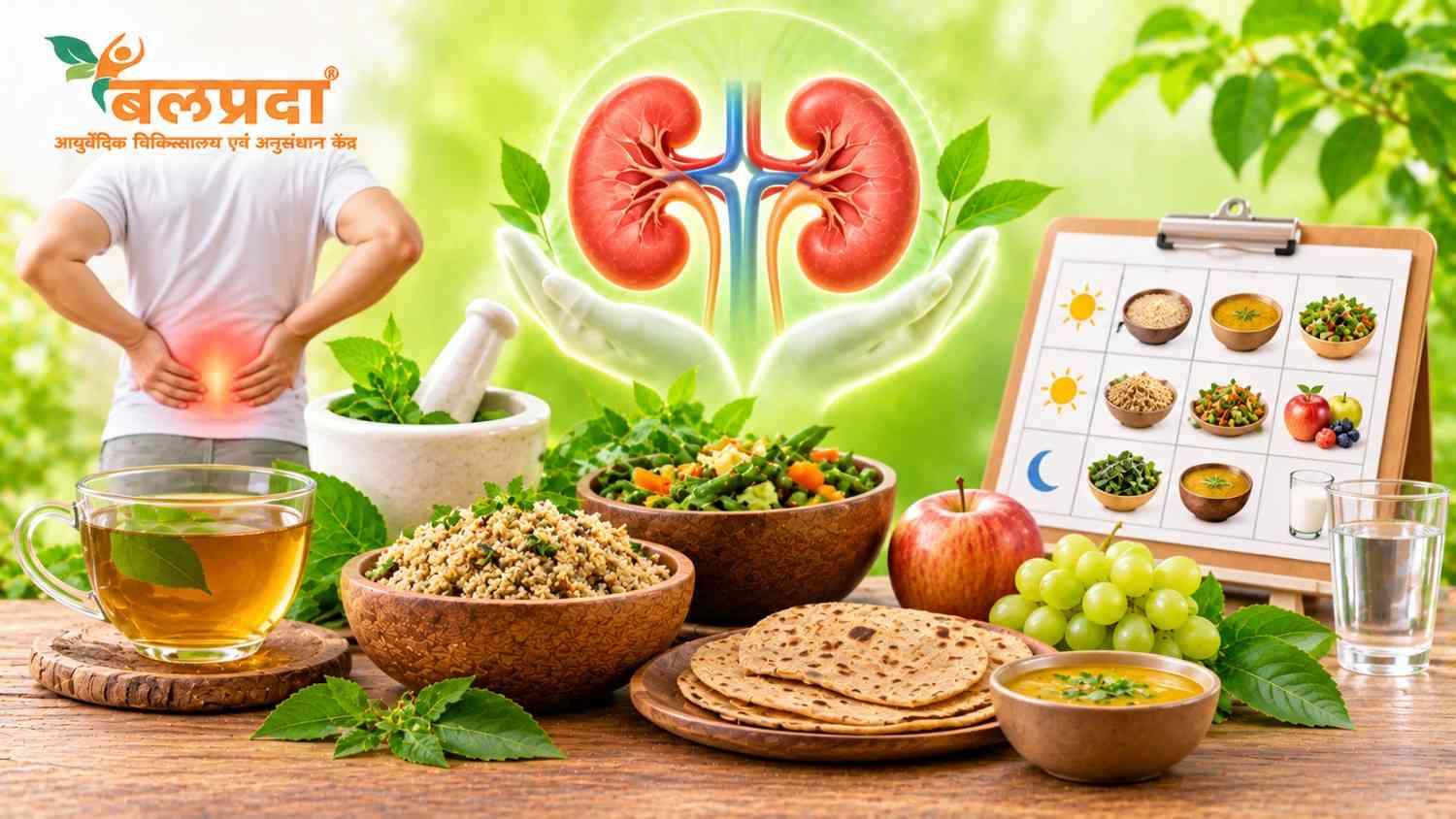
Living with kidney disease means every meal matters, because weak kidneys struggle to filter extra salt, potassium, phosphorus and fluid. Ayurveda favours light, fresh, easily digested food, which fits many kidney-friendly eating principles. This guide covers foods to choose and avoid, a 7-day meal plan and a simple shopping list.
What Ayurveda Says About Kidney Health
The Ayurvedic View
- •Ayurveda links the urinary system with mutravaha srotas, the channels that carry urine out of the body.
- •It recommends warm, freshly cooked, simple meals that are easy to digest.
- •It discourages heavy, stale, oily, very salty and processed food.
Where Ayurveda and Modern Renal Care Agree
- •Both favour fresh food over packaged food.
- •Both advise less salt and fewer fried snacks.
- •Both stress regular meal times and sensible portions.
- •Both prefer home-cooked meals, where you control every ingredient.
Kidney-Safe Ground Rules
Know Your Numbers
- •Your limits for potassium, phosphorus, protein and fluids depend on your CKD stage, blood reports and dialysis status.
- •Ask your doctor for your personal limits and treat any plan below as a template.
Core Principles
- •Keep salt low and skip added salt at the table.
- •Avoid "low-sodium" salt substitutes, since many contain potassium chloride.
- •Follow your doctor's fluid limit exactly.
- •Eat fresh, home-cooked meals in moderate portions.
Foods Often Included in a Kidney-Friendly Ayurvedic Diet
Vegetables
- •Bottle gourd (lauki) is light, cooling and generally low in potassium.
- •Ridge gourd (turai), pointed gourd (parwal) and tinda are gentle, easy-to-digest choices.
- •Cabbage, cauliflower and capsicum are commonly used in kidney diets.
- •Tip: Peel, chop small, soak and boil vegetables, then discard the water to lower potassium.
Grains
- •White rice, suji, poha, semiya and refined wheat roti are usually easier on the kidneys than bran-rich whole grains, which carry more phosphorus and potassium.
- •Dalia can work in small portions if your doctor approves.
Dals and Protein
- •Moong dal is a classic easy-to-digest Ayurvedic dal.
- •Wash it well and keep the consistency thin.
- •Keep portions small and ask your dietitian how much protein suits you.
Fruits
- •Apple is typically a safer choice in measured portions.
- •Banana, orange, mango and coconut water are high in potassium and often restricted.
- •Confirm with your doctor.
Spices
- •Cumin, coriander, fennel, ajwain, curry leaves, hing and a pinch of turmeric add flavour without relying on salt.
- •A little fresh lemon juice can lift taste.
Foods to Limit or Avoid
- •High-potassium foods: potatoes, tomatoes, spinach, beetroot, bananas, oranges, coconut water and dried fruits, depending on your lab values.
- •High-phosphorus foods: cola drinks, processed cheese, packaged snacks and, for some people, large amounts of dairy, nuts and whole grains.
- •Salty foods: pickles, papad, namkeen, instant noodles, chips and ready-to-eat mixes.
- •Heavy and fried food: deep-fried snacks and very oily curries.
- •Alcohol and packaged juices.
7-Day Ayurvedic-Style Kidney-Friendly Meal Plan
- •Keep portions small and adjust to your doctor's advice on protein, potassium and fluids.
Day 1 (Monday)
- •Breakfast: Vegetable suji upma with carrot and capsicum.
- •Lunch: Roti, lauki sabzi, thin moong dal.
- •Dinner: Rice with turai sabzi.
Day 2 (Tuesday)
- •Breakfast: Poha with onion and a little lemon, no peanuts.
- •Lunch: Rice, cabbage sabzi, light dal.
- •Dinner: Warm lauki soup with one roti.
Day 3 (Wednesday)
- •Breakfast: Dalia porridge cooked with water, topped with chopped apple.
- •Lunch: Roti, parwal sabzi.
- •Dinner: Light moong dal khichdi.
Day 4 (Thursday)
- •Breakfast: Rice-flour cheela with grated lauki.
- •Lunch: Rice, cauliflower sabzi, thin dal.
- •Dinner: Roti with turai sabzi.
Day 5 (Friday)
- •Breakfast: Semiya upma with low-potassium vegetables.
- •Lunch: Roti, cabbage-carrot sabzi.
- •Dinner: Lauki soup with rice.
Day 6 (Saturday)
- •Breakfast: Vegetable dalia.
- •Lunch: Rice, parwal sabzi, thin moong dal.
- •Dinner: Moong dal khichdi with a little ghee, if approved.
Day 7 (Sunday)
- •Breakfast: Apple slices with a plain roti.
- •Lunch: Rice, tinda or lauki sabzi, light dal.
- •Dinner: Roti with cabbage sabzi.
Snack Ideas
- •Apple slices, unsalted murmura or a plain roti with a light sabzi.
- •Avoid packaged namkeen and salted biscuits.
Cooking Tips for Kidney Patients
- •Leach vegetables: soak cut vegetables in warm water for a few hours, then boil in fresh water and drain.
- •Use whole-spice tempering: cumin, hing and curry leaves build flavour without extra salt.
- •Cook fresh: avoid stale or repeatedly reheated food.
- •Use less oil: steam, boil or lightly sauté instead of deep-frying.
- •Measure portions: use a small bowl or cup for dal, rice and fluids.
A Word of Caution on Herbs and Supplements
- •Do not start Ayurvedic herbs, churnas, bhasmas or "kidney cleansing" products on your own.
- •Some herbal products contain heavy metals or are high in potassium, and may harm weakened kidneys or interact with medicines.
- •Tell your nephrologist and your Ayurvedic practitioner about every product you take.
- •Be wary of any product that claims to cure kidney disease.
Smart Grocery List for a Kidney-Friendly Week
- •Vegetables: lauki, turai, parwal, tinda, cabbage, cauliflower, capsicum, carrot.
- •Grains: white rice, suji, poha, dalia, semiya, atta.
- •Dals: split yellow moong dal.
- •Fruit: apples.
- •Flavour: cumin, coriander, fennel, ajwain, turmeric, hing, curry leaves, lemon.
- •Label check: choose plain, unsalted staples with low sodium and no added phosphates.
- •Neighbourhood supermarkets like The Buyzaar Mart stock many of these everyday staples under one roof, so you can build a fresh weekly basket without relying on packaged food.
- •Always read labels before buying.
Final Thoughts
- •An Ayurvedic-style kidney diet centres on fresh, light, home-cooked meals with little salt and no heavy processed food.
- •The 7-day plan above is a starting template, not a prescription.
- •Work with your nephrologist and a renal dietitian to adjust it to your stage, reports and treatment.
- •Start small, read every label and build your weekly basket around simple staples.
- •Small, consistent food choices, made with medical guidance, make the biggest difference over time.
Frequently Asked Questions
Can an Ayurvedic diet cure kidney disease?
No. Diet can support kidney health and slow strain, but it does not cure kidney disease. Use it alongside your doctor's treatment, never instead of it.
Is moong dal safe for kidney patients?
Moong dal is often included because it is light and easy to digest. It still contains potassium, phosphorus and protein, so keep portions small and follow your dietitian's limit.
Which vegetables are usually kidney-friendly?
Lauki, turai, parwal, tinda, cabbage, cauliflower and capsicum are commonly used. Leaching them (soak, boil, drain) can further reduce potassium.
Which fruits should kidney patients avoid?
Banana, orange, mango, coconut water and dried fruits are high in potassium and are often restricted. Apple in measured portions is commonly allowed, but confirm with your doctor.
Can kidney patients take Ayurvedic herbs?
Only with approval from your nephrologist. Some herbal products can be unsafe for weak kidneys, so never self-medicate.
How much water should a kidney patient drink?
It depends on your stage, urine output and dialysis status. Follow the fluid limit set by your doctor, and don't copy general "drink 3 litres a day" advice.
Is this meal plan suitable for dialysis patients?
Dialysis patients often need more protein and have different potassium and fluid limits. Use the plan only as a template and have it adjusted by your renal dietitian.
Is this plan vegetarian?
Yes, it is fully vegetarian, which fits traditional Ayurvedic eating. Your dietitian can help you meet protein needs within your kidney limits.