What Is Ayurveda? History, Principles and How It Works
A simple guide to Ayurveda: its 5,000-year history, tridosha principles and how ayurvedic treatment works, by Balprada Ayurvedic Hospital, Bilari.
Ayurveda is one of the oldest healthcare systems in the world, and people across India still trust it today. Families in Bilari, Moradabad and Rampur now choose ayurvedic treatment for lasting relief, not just a quick fix. But what is Ayurveda, where did it come from, and how does it actually work? This guide explains the history, core principles and working method of Ayurveda in simple words.
What Is Ayurveda?
The word Ayurveda comes from two Sanskrit words: Ayu, meaning life, and Veda, meaning knowledge. Together they mean “the science of life.”
Ayurveda is a natural system of medicine that treats the whole person: body, mind and spirit. Modern medicine often targets one symptom at a time. An ayurvedic doctor instead looks for the root cause of the problem.
The goal is simple. Keep healthy people healthy, and help sick people recover through proper diet, herbal medicines, daily routine, cleansing therapies and mindful living.
History of Ayurveda
Ayurveda is more than 5,000 years old. Its journey can be understood in four stages.
1. The Vedic Period
The earliest ideas of Ayurveda appear in the Rigveda and Atharvaveda, the ancient Indian scriptures. These texts mention healing herbs, prayers for good health and simple remedies for common illnesses. Knowledge was passed from teacher to student by word of mouth.
2. The Classical Period
This is the golden age of Ayurveda, when its knowledge was written down in detail. Three texts became the foundation of ayurvedic medicine:
- •Charaka Samhita: covers internal medicine, diet, diagnosis and the duties of a physician.
- •Sushruta Samhita: covers surgery, surgical instruments and procedures. Sushruta is often called the “Father of Surgery.”
- •Ashtanga Hridayam: by Vagbhata, a clear summary of all eight branches of Ayurveda.
3. The Spread Across Asia
Through traders, travelers and Buddhist monks, ayurvedic knowledge reached Sri Lanka, Tibet, Nepal and Southeast Asia. It also influenced other traditional healing systems.
4. The Modern Revival
Ayurveda lost ground during the colonial period but was revived after Independence. Today it is a recognized system of medicine in India, taught in government-approved colleges and promoted by the Ministry of AYUSH. Interest in Ayurveda is also growing worldwide.
Basic Principles of Ayurveda
Ayurveda is built on a few simple ideas. Once you understand them, the whole system becomes easy to follow.
1. The Five Elements (Panchamahabhuta)
Ayurveda says everything in nature, including the human body, is made of five elements: space, air, fire, water and earth. Good health depends on keeping these elements in balance.
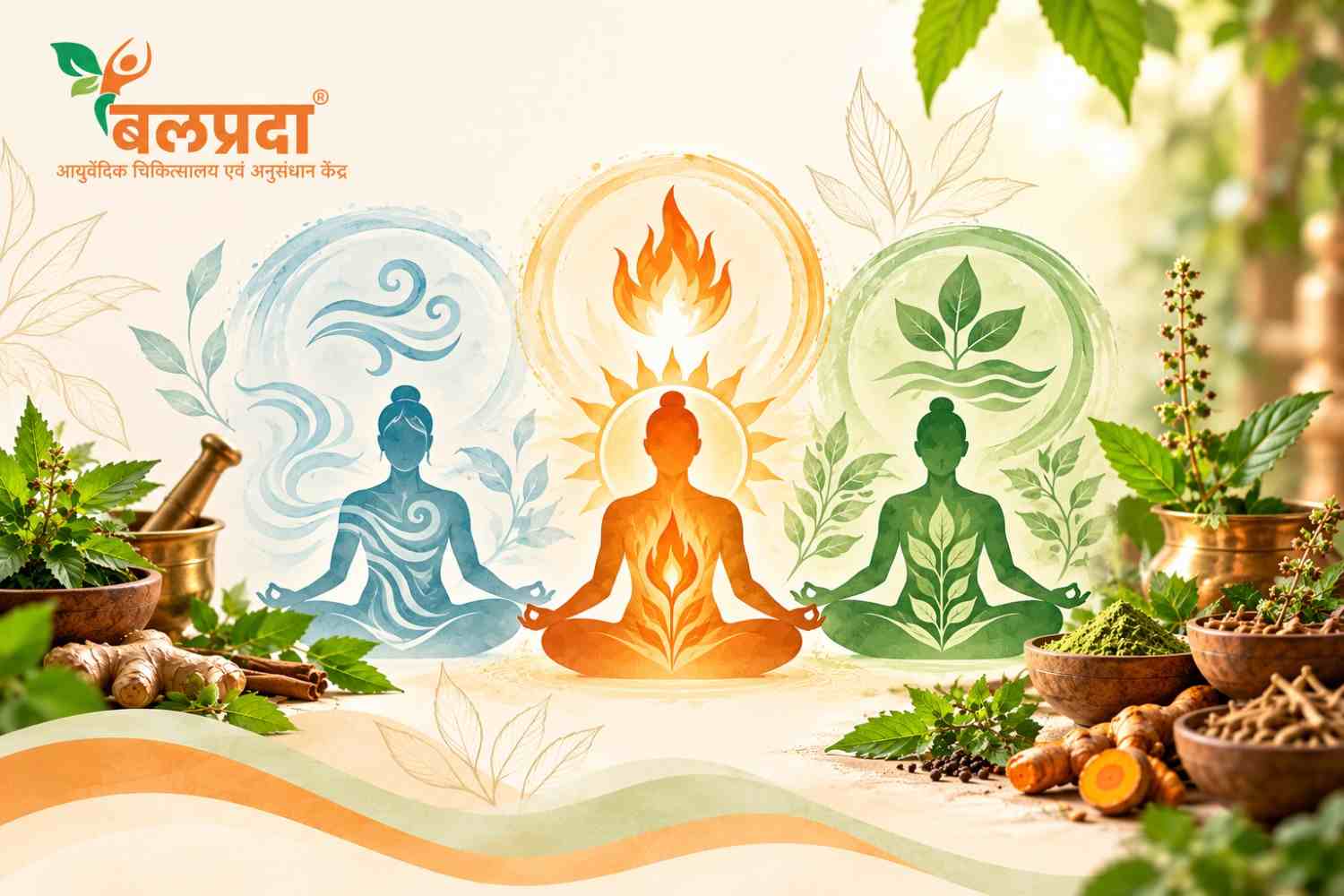
2. The Three Doshas (Tridosha)
The five elements combine to form three body energies called doshas:
- •Vata (air + space): controls movement, breathing, nerves and circulation. When imbalanced, it can cause dryness, joint pain, gas, anxiety and poor sleep.
- •Pitta (fire + water): controls digestion, metabolism and body heat. When imbalanced, it can cause acidity, skin rashes, anger and inflammation.
- •Kapha (water + earth): controls structure, strength and immunity. When imbalanced, it can cause weight gain, congestion, laziness and slow digestion.
Every person has all three doshas, but in a different ratio. Disease begins when one or more doshas go out of balance.
3. Your Body Type (Prakriti)
Your Prakriti is your natural body constitution, set at birth. It decides your build, appetite, energy and even your mood. Your current state of health is called Vikriti. An ayurvedic doctor compares the two to find what has gone wrong and how to fix it.
4. Digestive Fire (Agni)
Agni is the strength of your digestion and metabolism. Strong Agni means food is digested well and the body stays energetic. Weak Agni leaves undigested waste in the body called Ama (toxins), which Ayurveda sees as the root of many diseases.
5. Tissues and Waste (Dhatu and Mala)
Ayurveda describes seven body tissues (dhatus), from plasma and blood to bone and reproductive tissue. It also stresses the proper removal of waste (malas) such as stool, urine and sweat. Health means both are working well.
How Does Ayurveda Work?
Ayurvedic treatment is personal. Two people with the same disease may get different treatment because their body types and imbalances are different. The process usually follows these steps:
Step 1: Diagnosis
The doctor studies your pulse (Nadi Pariksha), tongue, eyes, skin, digestion, sleep and daily habits. This helps find your Prakriti and the dosha that is out of balance.
Step 2: Cleansing (Shodhana)
If toxins have built up, cleansing therapies such as Panchakarma remove them from the body. This resets the system and helps medicines work better.
Step 3: Healing (Shamana)
Herbal medicines, powders, tablets, decoctions and medicated oils are given to calm the imbalanced dosha and treat the cause of the problem.
Step 4: Diet (Ahara)
Food is treated as medicine. You are told which foods to eat, avoid and combine, based on your dosha and the season.
Step 5: Lifestyle (Vihara)
A healthy routine (Dinacharya) is advised, including waking early, regular meals, yoga, pranayama, meditation and enough sleep.
Step 6: Rejuvenation (Rasayana)
Special herbs and therapies build immunity, strength and long-term vitality.
Common Ayurvedic Treatments
Some of the most popular ayurvedic therapies include:
- •Panchakarma: a five-step detox program for deep cleansing.
- •Abhyanga: full-body massage with warm medicated oils.
- •Shirodhara: a steady stream of warm oil on the forehead for stress and sleep.
- •Basti: medicated enema therapy, especially helpful for Vata disorders.
- •Nasya: nasal therapy for sinus, headache and head-and-neck problems.
- •Herbal medicines: ashwagandha, triphala, giloy, tulsi, brahmi and more.
Ayurveda is commonly used for digestive problems, joint and back pain, skin disorders, stress, sleep problems, women’s health issues, lifestyle disorders and general wellness.
Benefits of Ayurveda
- •Treats the root cause, not just the symptoms
- •Uses natural herbs, oils and food-based remedies
- •Gives a personal plan for every patient
- •Improves digestion, immunity and energy
- •Supports mental calm and better sleep
- •Helps prevent disease through a healthy daily routine
Is Ayurveda Safe? Things to Remember
Ayurveda is safe when practiced correctly, but a few points matter:
- •Always consult a qualified ayurvedic doctor (BAMS) before starting any medicine.
- •Do not self-medicate with herbs, even if they are natural.
- •Tell your doctor about any other medicines or health conditions.
- •Buy ayurvedic products only from trusted, licensed sources.
- •Ayurveda works gradually, so follow the full plan with patience.
Ayurvedic Treatment at Balprada Ayurvedic Hospital, Bilari
At Balprada Ayurvedic Hospital, we follow the true principles of Ayurveda to care for every patient. Our ayurvedic doctors study your body type, lifestyle and health history before suggesting any treatment. Patients from Bilari, Moradabad, Rampur and nearby areas visit us for authentic ayurvedic consultation, Panchakarma and natural healing in a calm, caring environment.
🔗 Book a consultation: balpradaindia.com/contact
Conclusion
Ayurveda is more than a medical system. It is a complete way of living in balance with nature. Its history shows how strong and trusted it has been for thousands of years, and its principles of tridosha, Agni and personal care still work well in today’s busy life.
If you are looking for genuine ayurvedic treatment near Bilari or Moradabad, book a consultation at Balprada Ayurvedic Hospital today and take the first step toward natural, lasting health.
Frequently Asked Questions
What is Ayurveda in simple words?
Ayurveda is the ancient Indian science of life. It heals the body and mind using herbs, diet, yoga, massage and a healthy lifestyle.
How old is Ayurveda?
Ayurveda is more than 5,000 years old. Its main texts, Charaka Samhita and Sushruta Samhita, were written over 2,000 years ago.
What are the three doshas in Ayurveda?
The three doshas are Vata, Pitta and Kapha. They are body energies that control movement, digestion and structure. Health depends on keeping them balanced.
How long does ayurvedic treatment take to work?
It depends on the condition and how long it has been present. Mild problems may improve in a few weeks, while long-term diseases need more time and steady follow-up.
Can I take ayurvedic medicine with allopathic medicine?
Often yes, but always check with your ayurvedic doctor and your regular doctor first, so there is no clash between medicines.