Kadha, Churna, Ras, Bhasma: Ayurvedic Medicine Forms Explained
Learn the difference between Kadha, Churna, Ras and Bhasma in Ayurveda, how doctors choose a medicine form and the safety points for each.
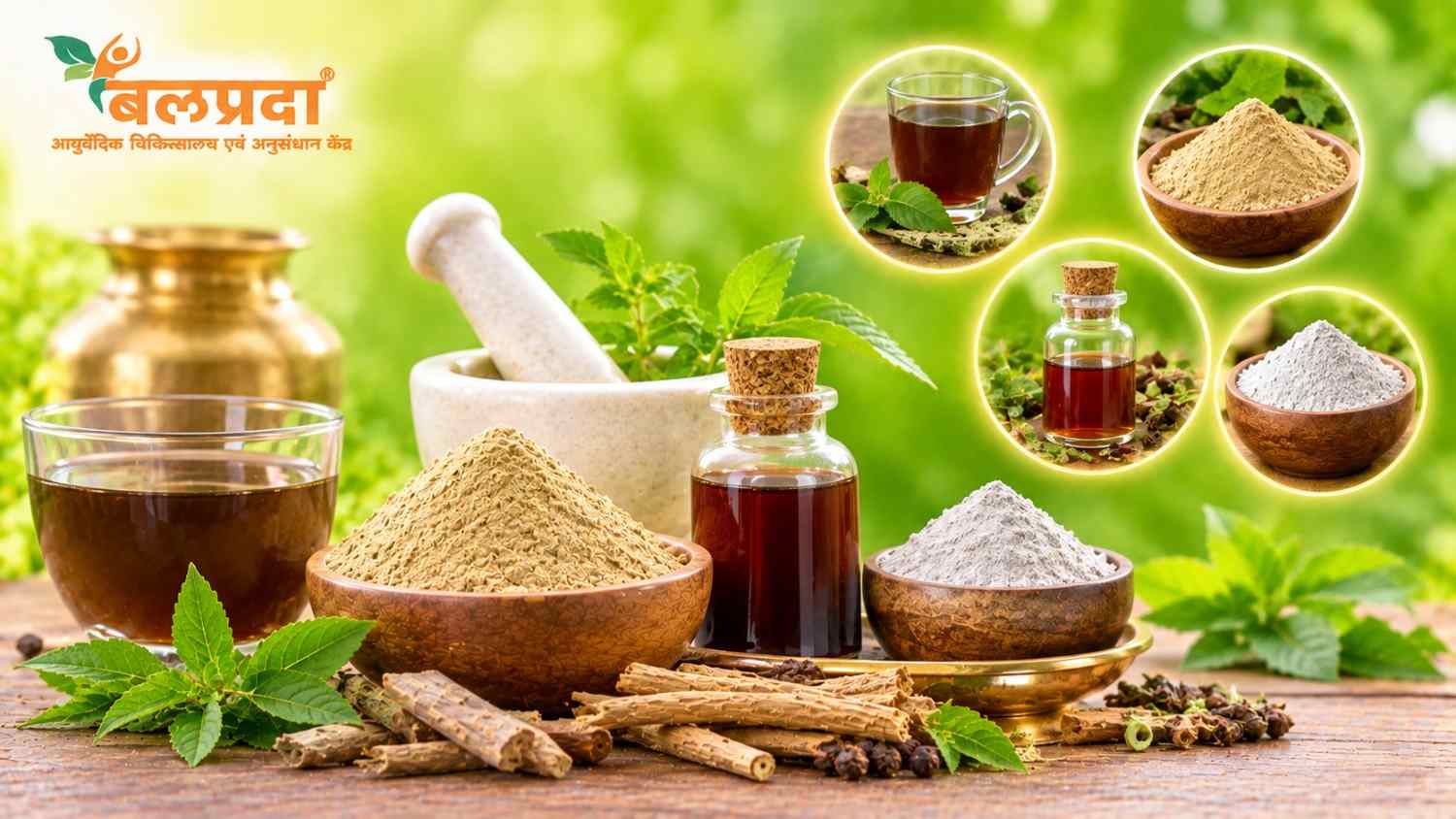
Ayurvedic medicines come in many forms, such as powders, decoctions, tablets, oils and processed mineral preparations. The form is not a detail. In Ayurveda it is chosen with care, because it changes how the medicine is taken, how strong it is and how the body responds.
Why Medicine Forms Matter in Ayurveda
- •Ayurvedic medicines come in many forms, such as powders, decoctions, tablets, oils and processed mineral preparations.
- •The form is not a detail. In Ayurveda it is chosen with care, because it changes how the medicine is taken, how strong it is and how the body responds.
- •A common idea in classical texts is that the same herb can act differently as a fresh juice, a decoction, a powder or a medicated oil.
- •The doctor selects the form based on the person, the condition, the season and digestion.
- •This guide explains four common terms, Kadha, Churna, Ras and Bhasma, along with other forms you may hear about, and the care needed with each.
- •It is for information only and not a guide to self-treatment.
Kadha (Kwatha or Decoction)
What It Is
- •Kadha, also called Kwatha, is a decoction made by boiling herbs in water until the water reduces to a fraction of the original quantity.
- •It is then strained and taken warm.
Traditional Use
- •It is traditionally used when a quick and strong effect is wanted, and in digestive, seasonal and Kapha related complaints.
- •Many classical medicines, such as Kashayam, follow this method.
Points to Know
- •Fresh preparation matters. A decoction is traditionally made for each use, because it does not keep well.
- •Taste can be bitter or strong, and people with weak digestion or acidity may find it harsh.
- •Home kadha recipes with many herbs can be too strong for children, pregnant women or people with long-term conditions.
- •Take advice first.
Churna (Powder)
What It Is
- •Churna is a fine powder made from dried herbs.
- •It may be a single herb or a mix, such as Triphala churna.
Traditional Use
- •It is traditionally taken with water, honey, ghee or another carrier (anupana) chosen by the doctor, and is common for digestion and daily support.
- •Our guide on Triphala explains one popular churna.
Points to Know
- •Powders lose strength with time, moisture and poor storage.
- •Keep them in a clean, dry, airtight container and check the expiry date.
- •Powders are easier to adulterate, so buy only from reliable, licensed sources.
- •The dose is small and specific. More does not mean better.
Ras (Rasa Preparations and Juice)
What It Is
- •The word Ras has more than one meaning in Ayurveda, which often confuses people.
- •In one meaning, Swaras or Ras is the fresh juice of a herb, such as Giloy juice or Amla juice.
- •Our guide on Guduchi, Amla and Neem explains these herbs.
- •In another meaning, Rasa Shastra refers to the branch of Ayurveda that deals with processed mercury, other metals and minerals, and the preparations made from them.
- •These are called Rasaushadhi.
Traditional Use
- •Fresh juices are traditionally used for short courses.
- •Rasa Shastra preparations are traditionally used in small doses for specific conditions, and always with detailed guidance from a doctor.
Points to Know
- •Juices spoil quickly and are best used fresh and clean.
- •Rasa Shastra medicines need special caution, as explained in the Bhasma section below.
Bhasma (Calcined Preparations)
What It Is
- •Bhasma means ash.
- •It is a fine preparation made from metals or minerals through repeated purification (Shodhana) and heating (Marana) steps, often with herbal juices, to make a very fine powder.
Traditional View
- •Classical texts describe bhasmas as being used in very small doses, and supporters say the traditional processing changes the nature of the metal or mineral.
- •Examples in practice include Swarna, Lauha and Mukta bhasmas.
Safety and Quality Concerns
- •Some studies of products have found heavy metals such as lead, mercury and arsenic, and critics and regulators raise safety concerns.
- •Research on this is mixed, and quality differs widely by maker.
- •Bhasma should be used only when prescribed by a qualified doctor, made by a licensed, reliable manufacturer, and taken for the advised period only.
- •Never buy bhasma from unknown sellers or take it as a home remedy.
- •Our guide on Herbal Medicines and Heavy Metals explains how to check quality.
Other Common Medicine Forms
Vati and Gutika (Tablets or Pills)
- •Powders or extracts are shaped into tablets for easier dosing and longer shelf life.
Asava and Arishta (Fermented Preparations)
- •These are fermented herbal liquids that naturally contain a small amount of self-generated alcohol.
- •People who avoid alcohol, children, pregnant women and people with liver disease should ask the doctor first.
Taila and Ghrita (Medicated Oils and Ghee)
- •Oils are used for massage and other external therapies, and medicated ghee is taken in measured amounts under guidance.
Avaleha (Herbal Jams)
- •These are sweet, thick preparations such as Chyawanprash.
- •They contain sugar or jaggery, so people with diabetes should ask the doctor first.
How Doctors Choose the Right Form
- •The doctor considers your body type (Prakriti), the imbalance (Vikriti), the strength of digestion, age, season and the condition being treated.
- •Our guides on Vata, Pitta, Kapha and Prakriti, Agni and Ritucharya explain these ideas.
- •Strong forms such as bhasma and Rasa Shastra preparations are never chosen casually.
- •A form that suits one person may not suit another.
- •The carrier (anupana), timing and duration are part of the prescription, and changing them on your own can change the effect.
Safety Points for Every Form
- •Do not copy a dose or a recipe from the internet or a friend.
- •Tell your doctor about all medicines, including allopathic medicines and home remedies.
- •Our guide on Ayurveda vs Allopathy explains why this matters.
- •Buy only from licensed manufacturers, and check the label for ingredients, licence number, batch number and expiry date.
- •Our guide on Is Ayurvedic Treatment Safe? explains what to check.
- •Stop and contact a doctor if you notice rash, swelling of the lips or face, breathlessness, repeated vomiting, severe stomach pain, yellow eyes or skin, or unusual tiredness.
Common Myths
- •Myth: kadha is always safe because it is just boiled herbs. Fact: strong herbs in the wrong amount can cause harm.
- •Myth: all bhasmas are unsafe, or all bhasmas are completely safe. Fact: the matter is debated, so use them only under a qualified doctor and from a licensed maker.
- •Myth: a stronger form works faster and better. Fact: the right form is the one that suits the person.
When to See a Doctor
- •See a doctor before starting any new medicine form, especially if you are pregnant, have a long-term condition, or take other medicines.
- •Seek urgent care for breathlessness, confusion, severe vomiting, severe stomach pain or fainting after any medicine.
- •Never stop prescribed medicines on your own.
Ayurvedic Guidance at Balprada Ayurvedic Hospital, Bilari
- •Balprada Ayurvedic Hospital & Research Center in Bilari, Moradabad has offered Ayurvedic care for 35 years, with consultation, diet and routine based care and regular follow-up.
- •Our doctors review your concern, history, reports and current medicines before suggesting any medicine or plan.
- •Balprada has its own pathology lab that supports blood, urine and other diagnostic testing.
- •Patients from Bilari, Moradabad, Rampur and nearby areas can visit our ashram and clinic, open 7 days a week from 10:00 AM to 2:00 PM, with free OPD on the 15th of every month.
- •🔗 Book a consultation: call or WhatsApp 8126364606, or visit balpradaindia.com/contact.
- •Our guide on what happens in the first Ayurvedic consultation explains how to prepare.
Frequently Asked Questions
What is the difference between Kadha and Churna?
Kadha is a decoction made by boiling herbs in water, while Churna is a dry powder of herbs.
What does Ras mean in Ayurveda?
It can mean fresh herb juice, or it can refer to Rasa Shastra, the branch that uses processed metals and minerals.
What is Bhasma?
It is a fine preparation made from metals or minerals through traditional purification and heating, and it should be used only under a qualified doctor.
Which form of Ayurvedic medicine is best?
There is no single best form. The doctor chooses the form for the person and condition.
Related Articles
What Is Ayurveda? History, Principles and How It Works
Ayurveda means the science of life. Understand its history, the five elements, tridosha, Prakriti and Agni, and see how a personal ayurvedic treatment plan is made.
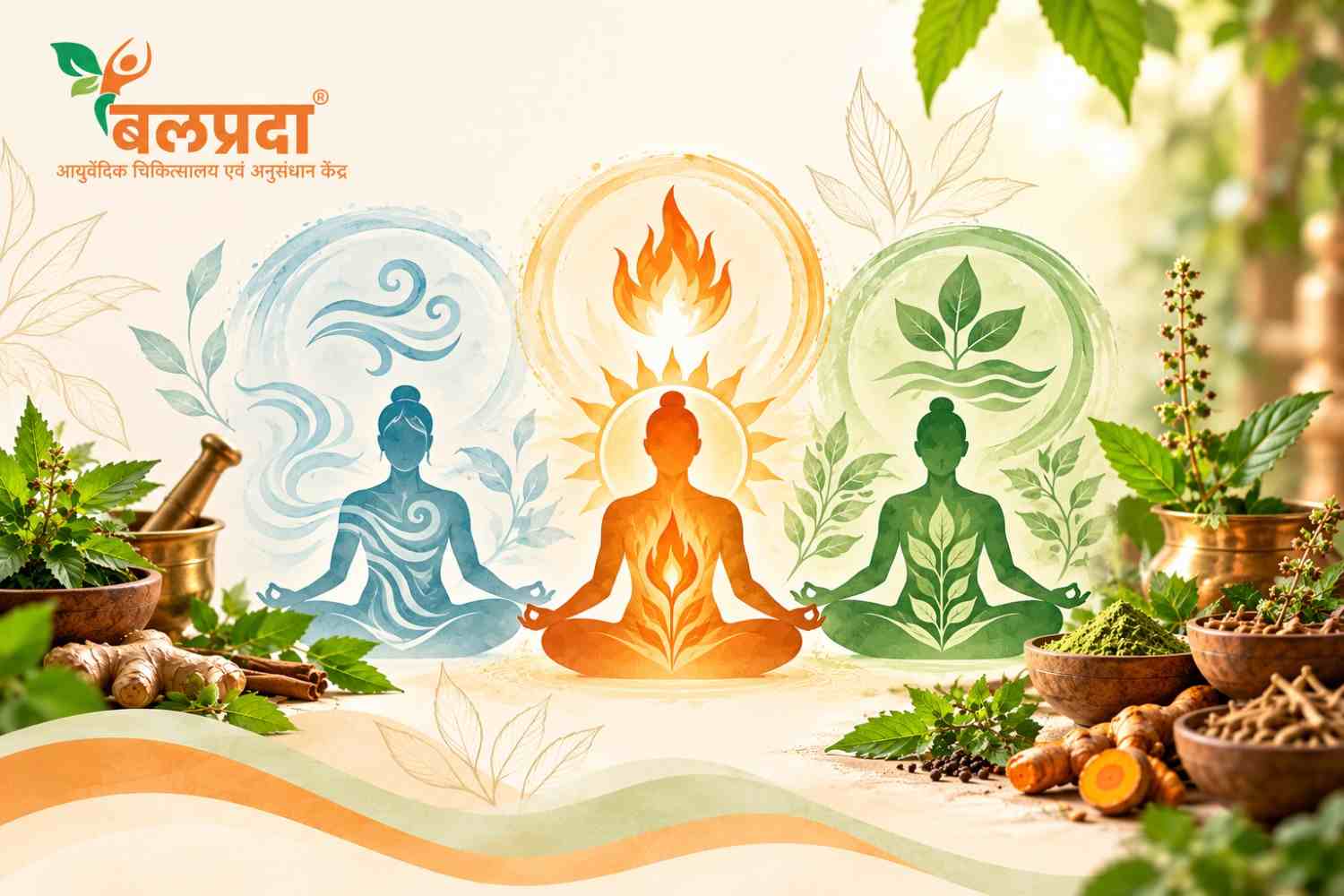
Vata, Pitta, Kapha: Find Your Body Type (Prakriti)
Why do some people feel cold all the time while others sweat in winter? Your Prakriti holds the answer. Find your Vata, Pitta or Kapha type with an easy self-check.
Ayurvedic Daily Routine (Dinacharya) for Better Health
Dinacharya is the Ayurvedic daily routine for better digestion, sleep and energy. Learn morning, midday, evening and night habits, dosha-based routines and seasonal care.